Showing posts with label Transformation. Show all posts

Sunday, March 17, 2013

Book Review: Switch - How to Change Things When Change is Hard

http://www.flipitconsulting.com/wp-content/uploads/2012/07/scaled.switch-heath.jpgChip and Dan Heath's book "Change" was one of the books recommended at a Leadership Summit I attended a couple of years ago. They are a couple of sharp young guys who wrote this book after doing extensive research in psychology, sociology and other fields on how to bring about transformative change.

I found this book appealing as a pastor because a large part of what I do is try to help people bring about positive change in their lives. This book is written to help leaders understand why and how people change, what keeps us from changing, and how to overcome obstacles to change.

For instance, in each of us we find that there tends to be a conflict whenever even a positive change is suggested. As psychologists have discovered, our rational mind (the rider) understands the need to change, but our emotional mind (the elephant) resists change because change involves action and disturbing existing routine. However, if we can find a way to overcome that tension, change can happen quickly.

They begin by highlighting three surprises regarding change which were discovered through studies. The first is that What looks like a people problem is often a situation problem. In other words, we ought not to assume that people don't want to change. Often, they are in situations that make it difficult for them to change.

The second surprise is that What looks like laziness is often exhaustion. This is because often people are trying to change through the power of self-control, which can be emotionally exhausting. Self-control is an exhaustible resource. The bigger the change, the harder it is for someone to force themselves to make.

The third surprise is that What looks like resistance is often a lack of clarity. Sometimes we really don't know how to get to the other side, we just know that we want to change. We can find ourselves spinning our wheels because we just don't know what to do.

In the book, the Heaths provide a three-part framework for helping to facilitate change and to overcome these three problems.
  1. Direct the Rider (Rational Mind) 
  2. Motivate the Elephant (Emotional Mind)
  3. Shape the Path
Using real life examples and case studies, we can see how even entrenched behaviors can be changed when the right information is provided clearly. We may assume that people simply don't want to follow our advice when, in fact, they don't understand the situation in the same way that we do. Ask yourself how you can demonstrate it more clearly.

They also demonstrate why it is important to engage people's emotional side in order to build momentum. If a person doesn't feel that change will have a worthwhile benefit they will resist. It's human nature. But when the emotional side of us is engaged, a great deal can be accomplished.

Finally they talk about one of the greatest ways to facilitate change - shaping the path. This speaks of environmental changes. This may be as simple as hiding the large plates and using only the smaller ones if your goal is to lose weight. Or it may mean using a two-step switch that requires two hands to activate for dangerous equipment in order to keep hands clear.

There are great examples in this book of ordinary people who were able to bring about radical change.
  • Medical interns who defeated an entrenched medical practice that was endangering lives.
  • A home-organizing specialist who developed a simple technique to overcome the dread of housekeeping.
  • The manager who reversed the reputation of a customer-support team from failures into standard-bearers.
This book is well worth the read for anyone who leads people, because leadership is all about facilitating change. If you have some changes that you need to make in your life, this may be helpful to you as well. For those who know me, do you think it's a coincidence that my desk and office are now clean for the first time in recent memory? I think not!

Related Articles:
Book Review: "Grace: More Than We Deserve, Greater Than We Imagine"
Book Review: I Am A Follower
Book Review: "The Harbinger"
Shawn McDonald - People Change
Developing Great Habits


Monday, December 31, 2012

Top 5 Blog Posts of 2012 - #4

This article seems to have some staying power. It was actually a reprint on one first published in August of 2011. What that tells me is that all of us have baggage that needs to be dealt with properly - sounds like a good New Years resolution.

"Take Out The Trash" - The Principle of Transformation

Part 2 of 6
This series is based on the last chapter of the book “Good to Great in God’s Eyes” by Chip Ingram. The first subject dealt with the principle of priority – “Put God First.” We looked at the reasons why God has to be at the center of any meaningful change in our lives.

Today I'm writing about taking out the trash, or the principle of transformation. How is it that we can be changed from the person that we’ve been into the person we want to be? Is change even possible? Many people would say that it’s not. You are who you are and you’re stuck with it.

What is it that makes us what we are, anyway? Is it genes? Is it our upbringing? Is it the experiences we’ve had; the trauma we’ve endured or the examples we’ve seen? The truth is that it’s all of these things and none of these things. All of these have a bearing on the kind of people we’ve become. But I can show you people who’ve been raised in the same home, been through the same things, had the same type of upbringing and yet are radically different. So, what is it?

I believe that much of who we are is based upon what we do with what we’ve experienced, and that is dictated by the way that we think. The principle of transformation comes straight out of Romans 12:2: “Do not conform to the pattern of this world, but be transformed by the renewing of your mind. Then you will be able to test and approve what God’s will is—his good, pleasing and perfect will.” There's a negative command in that verse that literally says to stop being conformed, or molded, to this world. Quit allowing the world system — its ideas, images, and values — to shape who you are. Get the trash out of your life.

This world and its systems have a powerful affect on the way that we think. If we’re not careful, we just gradually absorb messages over time and begin to accept them without thinking about whether or not they’re true. What are the lies that we believe? Many women believe that they have to look like Barbie; that they will never be good enough for someone to love them; or that they’re stupid, or fat and ugly; or that they are worthless or a lousy mother or wife. Many men believe that they will never amount to anything; that they’re a failure; that money or work equal love; that no matter what they do they’re not good enough.

That message might have come from the media or from a family member, from our friends or from a misguided teacher. It probably came from someone who didn’t intend to give you that message, but it’s there just the same. No matter what you do, that message that is recorded in your mind just keeps cropping up, keeping you from moving forward.

It’s not just those personal messages either, there are also truth claims that people accept, without thinking, that have a way of cluttering up our minds and confusing us. These are cultural assumptions that go unchallenged, and often leave us believing a lie. A famous Canadian example is the unimpeachable value of tolerance. Now I’m all for tolerance, by the original definition. What it used to mean was that you tolerated people who were different from you and allowed them to practice their beliefs in freedom. But what it’s grown to mean in today’s culture is quite different. Today any questioning of the truth claims of another person or religion makes you intolerant. A fall-out from that is that a great many people have lost the ability to think critically; to use reason. One of the lies I hear repeated often is that all religions are basically the same. That is not even close to being a true statement, but many accept it as fact.

So what are we to do with the messages in our minds that don’t belong; that are actually harmful? How do we change this? The first thing we need to do is to stop allowing the wrong sources to program our thinking. It’s the first rule of holes: when you’re in one – stop digging.

The second thing we need to do is to replace the lies with the truth. In 1 Corinthians 13:11 Paul says, “When I was a child, I talked like a child, I thought like a child, I reasoned like a child. When I became a man, I put the ways of childhood behind me.” In the Greek, it’s far more expressive. It basically says that he abolished and did away with the childish thinking.


In a modern analogy, it’s like going through all of the old files on your computer and getting rid of the unnecessary ones that you never use anymore. There are some files that just take up space and slow the system down. There are others that can actually be harmful, like viruses, and the longer you allow them to hang around, the more damage they cause you. They can sometimes make the whole system crash. GIGO (Garbage In, Garbage Out).

A lot of people can identify the thinking that has gotten them messed up, but don’t know how to change it. In the second part of Romans 12:2 Paul tells us how. Remember, the first part is a negative command, basically to stop allowing the world to force you into its mold.

That's followed by a positive command to allow God's Word to renew and transform you — to cause a metamorphosis, the same word used for the transfiguration of Jesus. Grammatically, this command is in the passive voice; God does it, but we allow it. We let our minds be transformed from the inside out so we can be people who prove and experience the will of God. Our lifestyle begins to demonstrate God's will — that which is good and acceptable and perfect.

Chip Ingram shares a story that illustrates the reality in far too many lives: "In my first pastorate in Kaufman, Texas, an older man who looked like he'd been through a lot came to church. His shirt was dirty, he looked and smelled like he hadn't taken a bath in six months, and he was hungry. We gave him some food, and the next week he brought his wife, who was in just as bad a condition as he was. After the service, they said they needed some money for electricity and other necessities."

"The church had a fund to help people, so I offered to go out to their house and visit. Theresa and I drove out in the country and found a house that didn't look very bad at all. A couple of horses and about five or six dogs in the yard all looked pretty healthy. But when we entered the house, I almost threw up from the stench. Garbage was on the floor, a container of something that had spoiled was left open, and cans of cat food for the nineteen cats running around the kitchen were spread out everywhere. The shades were pulled down, and he, his wife, and a very elderly woman sat in near darkness. I wondered how they could tolerate such nasty conditions, but when people live around trash long enough, they get accustomed to it. It starts to seem normal. We get used to a nauseating stench if we breathe it long enough."


I find that there are a lot of people like this. The mess that they're in has become "home." They know, at least on some level, that it's not good, but they have been there for so long that the possibility of change is foreign to them. God specializes in changing lives and giving fresh starts. He's prescribed clear directions for us - "be transformed by the renewing of (our) minds."

The first step on almost anyone's list is to admit that we have a problem. Once we understand that and identify the lie that we've been believing, we need to counteract it with the truth. It was Jesus, who said in John 8:32, "Then you will know the truth, and the truth will set you free.”

Here's a sensitive question - what is it in your life that needs to change? What are the habits, lies, and attitudes that you need to take to the curb? There may be more at stake than you realize. For some, the decisions you make can not only improve your life, but the lives of those around you. Some lies (and some sins) are generational. Someone started it, and someone needs to end it. Let that someone be you.

As J. Michael Straczynski said, “People spend too much time finding other people to blame, too much energy finding excuses for not being what they are capable of being, and not enough energy putting themselves on the line, growing out of the past, and getting on with their lives.”

Related Posts:
“Put God First” - The Principle of Priority
Developing Great Habits
Who I Am Makes A Difference
Are You Listening?
Transformation 

Wednesday, May 09, 2012

"Take Out The Trash" - The Principle of Transformation

This is a reprint of an article that appeared first in August of 2011. I hope you find it helpful.

Part 2 of 6
This series is based on the last chapter of the book “Good to Great in God’s Eyes” by Chip Ingram. The first subject dealt with the principle of priority – “Put God First.” We looked at the reasons why God has to be at the center of any meaningful change in our lives.

Today I'm writing about taking out the trash, or the principle of transformation. How is it that we can be changed from the person that we’ve been into the person we want to be? Is change even possible? Many people would say that it’s not. You are who you are and you’re stuck with it.

What is it that makes us what we are, anyway? Is it genes? Is it our upbringing? Is it the experiences we’ve had; the trauma we’ve endured or the examples we’ve seen? The truth is that it’s all of these things and none of these things. All of these have a bearing on the kind of people we’ve become. But I can show you people who’ve been raised in the same home, been through the same things, had the same type of upbringing and yet are radically different. So, what is it?

I believe that much of who we are is based upon what we do with what we’ve experienced, and that is dictated by the way that we think. The principle of transformation comes straight out of Romans 12:2: “Do not conform to the pattern of this world, but be transformed by the renewing of your mind. Then you will be able to test and approve what God’s will is—his good, pleasing and perfect will.” There's a negative command in that verse that literally says to stop being conformed, or molded, to this world. Quit allowing the world system — its ideas, images, and values — to shape who you are. Get the trash out of your life.

This world and its systems have a powerful affect on the way that we think. If we’re not careful, we just gradually absorb messages over time and begin to accept them without thinking about whether or not they’re true. What are the lies that we believe? Many women believe that they have to look like Barbie; that they will never be good enough for someone to love them; or that they’re stupid, or fat and ugly; or that they are worthless or a lousy mother or wife. Many men believe that they will never amount to anything; that they’re a failure; that money or work equal love; that no matter what they do they’re not good enough.

That message might have come from the media or from a family member, from our friends or from a misguided teacher. It probably came from someone who didn’t intend to give you that message, but it’s there just the same. No matter what you do, that message that is recorded in your mind just keeps cropping up, keeping you from moving forward.

It’s not just those personal messages either, there are also truth claims that people accept, without thinking, that have a way of cluttering up our minds and confusing us. These are cultural assumptions that go unchallenged, and often leave us believing a lie. A famous Canadian example is the unimpeachable value of tolerance. Now I’m all for tolerance, by the original definition. What it used to mean was that you tolerated people who were different from you and allowed them to practice their beliefs in freedom. But what it’s grown to mean in today’s culture is quite different. Today any questioning of the truth claims of another person or religion makes you intolerant. A fall-out from that is that a great many people have lost the ability to think critically; to use reason. One of the lies I hear repeated often is that all religions are basically the same. That is not even close to being a true statement, but many accept it as fact.

So what are we to do with the messages in our minds that don’t belong; that are actually harmful? How do we change this? The first thing we need to do is to stop allowing the wrong sources to program our thinking. It’s the first rule of holes: when you’re in one – stop digging.

The second thing we need to do is to replace the lies with the truth. In 1 Corinthians 13:11 Paul says, “When I was a child, I talked like a child, I thought like a child, I reasoned like a child. When I became a man, I put the ways of childhood behind me.” In the Greek, it’s far more expressive. It basically says that he abolished and did away with the childish thinking.

In a modern analogy, it’s like going through all of the old files on your computer and getting rid of the unnecessary ones that you never use anymore. There are some files that just take up space and slow the system down. There are others that can actually be harmful, like viruses, and the longer you allow them to hang around, the more damage they cause you. They can sometimes make the whole system crash. GIGO (Garbage In, Garbage Out).

A lot of people can identify the thinking that has gotten them messed up, but don’t know how to change it. In the second part of Romans 12:2 Paul tells us how. Remember, the first part is a negative command, basically to stop allowing the world to force you into its mold.

That's followed by a positive command to allow God's Word to renew and transform you — to cause a metamorphosis, the same word used for the transfiguration of Jesus. Grammatically, this command is in the passive voice; God does it, but we allow it. We let our minds be transformed from the inside out so we can be people who prove and experience the will of God. Our lifestyle begins to demonstrate God's will — that which is good and acceptable and perfect.

Chip Ingram shares a story that illustrates the reality in far too many lives: "In my first pastorate in Kaufman, Texas, an older man who looked like he'd been through a lot came to church. His shirt was dirty, he looked and smelled like he hadn't taken a bath in six months, and he was hungry. We gave him some food, and the next week he brought his wife, who was in just as bad a condition as he was. After the service, they said they needed some money for electricity and other necessities."

"The church had a fund to help people, so I offered to go out to their house and visit. Theresa and I drove out in the country and found a house that didn't look very bad at all. A couple of horses and about five or six dogs in the yard all looked pretty healthy. But when we entered the house, I almost threw up from the stench. Garbage was on the floor, a container of something that had spoiled was left open, and cans of cat food for the nineteen cats running around the kitchen were spread out everywhere. The shades were pulled down, and he, his wife, and a very elderly woman sat in near darkness. I wondered how they could tolerate such nasty conditions, but when people live around trash long enough, they get accustomed to it. It starts to seem normal. We get used to a nauseating stench if we breathe it long enough."


I find that there are a lot of people like this. The mess that they're in has become "home." They know, at least on some level, that it's not good, but they have been there for so long that the possibility of change is foreign to them. God specializes in changing lives and giving fresh starts. He's prescribed clear directions for us - "be transformed by the renewing of (our) minds."

The first step on almost anyone's list is to admit that we have a problem. Once we understand that and identify the lie that we've been believing, we need to counteract it with the truth. It was Jesus, who said in John 8:32, "Then you will know the truth, and the truth will set you free.”

Here's a sensitive question - what is it in your life that needs to change? What are the habits, lies, and attitudes that you need to take to the curb? There may be more at stake than you realize. For some, the decisions you make can not only improve your life, but the lives of those around you. Some lies (and some sins) are generational. Someone started it, and someone needs to end it. Let that someone be you.

As J. Michael Straczynski said, “People spend too much time finding other people to blame, too much energy finding excuses for not being what they are capable of being, and not enough energy putting themselves on the line, growing out of the past, and getting on with their lives.”

Related Posts:
“Put God First” - The Principle of Priority
Developing Great Habits
Who I Am Makes A Difference
Are You Listening?
Transformation 

Tuesday, January 10, 2012

Keith Green - Gone But Not Forgotten


I bought myself a special gift a few weeks ago - it was a live concert on CD. When I was in High School and College a former hippie named Keith Green became a Christian. His unique approach to gospel music, his 'fro and his powerful lyrics made an impact on a generation. That CD took me way back.

Keith was born in Brooklyn, New York, to a schoolteacher father and a mother who used to sing with the Big Bands. His family moved to California, a short drive from Hollywood, and quickly became a part of the music scene. His music heritage went back to his grandfather who started Jaguar Records - the first rock and roll label. From the age of six Keith was playing piano and writing his own music.

Signed to a record deal by age 11, Keith was already disillusioned and feeling like a failure by 14. Like many of that era, he began to search for meaning and truth in all the wrong places. He was into eastern mysticism, drugs and free love. At 21, Keith and his new bride, Melody, found faith in Christ and everything changed in a hurry.

Keith took his music and began to use it to tell everyone about the God that he had discovered. The difference between Keith and other Christian artists was that he didn't bring his message to the church; he continued to sing at Bla-Bla Cafe, a coffeehouse in Los Angeles where every band that wanted to be discovered would play in the early '70's. Keith had played there during his search and now that he found the answer he wanted to share.

The response was less than unanimously enthusiastic. Keith was passionate about what he believed and his newly born again zeal combined with his imperfections made for a volatile combination. But Keith was nothing if not sincere. His life had been changed, and he knew it. He wanted to live what Jesus taught. His house became a place for people who wanted to get off the streets and get off drugs. He would hold Bible studies and try to help people in any way that he could. It was this kind of passion that showed through in his music and drew people to him. The following is an example of a song - a live version of "Make My Life A Prayer to You" from Estes Park in '78.


Keith went against the grain in a lot of different ways. He believed that God had given him the gift of music and that he had an obligation to share that gift with anyone and everyone. This lead him to not charge a set fee for his albums, people could give what they could afford, in many cases nothing. Hundreds of thousands of his albums have been given away. His concerts were also based on a free will offering for the same reason. They often resembled revival meetings, with Keith boldly challenging Christians to stop playing games and start following Christ. His message resonated with many of us who grew up in that era. Here's another example of the type of challenge his music represented:


Keith Green boarded a Cessna 414 in Texas on July 28, 1982, taking his 3 year old son Josiah and 2 year old daughter Bethany, along with other friends for a pleasure flight. The plane crashed and all 12 on board perished. His death sent shockwaves through the Christian music industry. What a tremendous loss. We can only speculate as to why he was taken so young and wonder what he would have accomplished if he had lived to old age. As it stands, I count at least 11 albums, with a number of them released after his death. Here is a link to a site with his complete Discography.

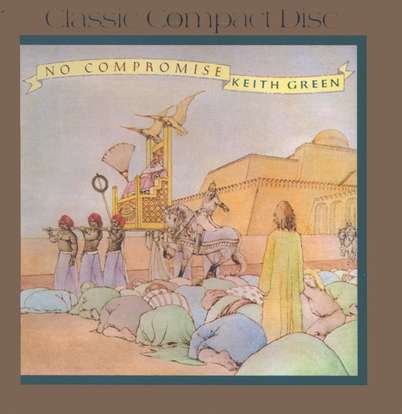
No Compromise, Compact Disc [CD]

His wife, Melody, has carried on the ministry which they both established - Last Days Ministries. My all-time favorite album cover is from his "No Compromise" album. It represented commitment for a me at a time when there were major choices to make in my life. His music helped me to make Christ the center of my life. Thanks Keith! See you on the other side. If you would like to read more about Keith I suggest you go to the bio on his official web-site. There's a great video on that site that I'll also share here.


Here's one final song that reflects Keith's heart, and hopefully mine as well.


Related Articles:


Shawn McDonald - People Change

Here's a great story that deserves to be shared. Watch this video detailing the big life change that took place for Shawn McDonald. I've met a few with stories like Shawn; it never gets old.


Here's one of his songs. Enjoy.


Related Articles:
"Take Out the Trash" - The Principle of Transformation
Transformation
Developing Great Habits

Sunday, August 14, 2011

"Take Out the Trash" - The Principle of Transformation


Part 2 of 6
This series is based on the last chapter of the book “Good to Great in God’s Eyes” by Chip Ingram. The first subject dealt with the principle of priority – “Put God First.” We looked at the reasons why God has to be at the center of any meaningful change in our lives.

Today I'm writing about taking out the trash, or the principle of transformation. How is it that we can be changed from the person that we’ve been into the person we want to be? Is change even possible? Many people would say that it’s not. You are who you are and you’re stuck with it.

What is it that makes us what we are, anyway? Is it genes? Is it our upbringing? Is it the experiences we’ve had; the trauma we’ve endured or the examples we’ve seen? The truth is that it’s all of these things and none of these things. All of these have a bearing on the kind of people we’ve become. But I can show you people who’ve been raised in the same home, been through the same things, had the same type of upbringing and yet are radically different. So, what is it?

I believe that much of who we are is based upon what we do with what we’ve experienced, and that is dictated by the way that we think. The principle of transformation comes straight out of Romans 12:2: “Do not conform to the pattern of this world, but be transformed by the renewing of your mind. Then you will be able to test and approve what God’s will is—his good, pleasing and perfect will.” There's a negative command in that verse that literally says to stop being conformed, or molded, to this world. Quit allowing the world system — its ideas, images, and values — to shape who you are. Get the trash out of your life.

This world and its systems have a powerful affect on the way that we think. If we’re not careful, we just gradually absorb messages over time and begin to accept them without thinking about whether or not they’re true. What are the lies that we believe? Many women believe that they have to look like Barbie; that they will never be good enough for someone to love them; or that they’re stupid, or fat and ugly; or that they are worthless or a lousy mother or wife. Many men believe that they will never amount to anything; that they’re a failure; that money or work equal love; that no matter what they do they’re not good enough.

That message might have come from the media or from a family member, from our friends or from a misguided teacher. It probably came from someone who didn’t intend to give you that message, but it’s there just the same. No matter what you do, that message that is recorded in your mind just keeps cropping up, keeping you from moving forward.

It’s not just those personal messages either, there are also truth claims that people accept, without thinking, that have a way of cluttering up our minds and confusing us. These are cultural assumptions that go unchallenged, and often leave us believing a lie. A famous Canadian example is the unimpeachable value of tolerance. Now I’m all for tolerance, by the original definition. What it used to mean was that you tolerated people who were different from you and allowed them to practice their beliefs in freedom. But what it’s grown to mean in today’s culture is quite different. Today any questioning of the truth claims of another person or religion makes you intolerant. A fall-out from that is that a great many people have lost the ability to think critically; to use reason. One of the lies I hear repeated often is that all religions are basically the same. That is not even close to being a true statement, but many accept it as fact.

So what are we to do with the messages in our minds that don’t belong; that are actually harmful? How do we change this? The first thing we need to do is to stop allowing the wrong sources to program our thinking. It’s the first rule of holes: when you’re in one – stop digging.

The second thing we need to do is to replace the lies with the truth. In 1 Corinthians 13:11 Paul says, “When I was a child, I talked like a child, I thought like a child, I reasoned like a child. When I became a man, I put the ways of childhood behind me.” In the Greek, it’s far more expressive. It basically says that he abolished and did away with the childish thinking.

In a modern analogy, it’s like going through all of the old files on your computer and getting rid of the unnecessary ones that you never use anymore. There are some files that just take up space and slow the system down. There are others that can actually be harmful, like viruses, and the longer you allow them to hang around, the more damage they cause you. They can sometimes make the whole system crash. GIGO (Garbage In, Garbage Out).

A lot of people can identify the thinking that has gotten them messed up, but don’t know how to change it. In the second part of Romans 12:2 Paul tells us how. Remember, the first part is a negative command, basically to stop allowing the world to force you into its mold.

That's followed by a positive command to allow God's Word to renew and transform you — to cause a metamorphosis, the same word used for the transfiguration of Jesus. Grammatically, this command is in the passive voice; God does it, but we allow it. We let our minds be transformed from the inside out so we can be people who prove and experience the will of God. Our lifestyle begins to demonstrate God's will — that which is good and acceptable and perfect.

Chip Ingram shares a story that illustrates the reality in far too many lives: "In my first pastorate in Kaufman, Texas, an older man who looked like he'd been through a lot came to church. His shirt was dirty, he looked and smelled like he hadn't taken a bath in six months, and he was hungry. We gave him some food, and the next week he brought his wife, who was in just as bad a condition as he was. After the service, they said they needed some money for electricity and other necessities."

"The church had a fund to help people, so I offered to go out to their house and visit. Theresa and I drove out in the country and found a house that didn't look very bad at all. A couple of horses and about five or six dogs in the yard all looked pretty healthy. But when we entered the house, I almost threw up from the stench. Garbage was on the floor, a container of something that had spoiled was left open, and cans of cat food for the nineteen cats running around the kitchen were spread out everywhere. The shades were pulled down, and he, his wife, and a very elderly woman sat in near darkness. I wondered how they could tolerate such nasty conditions, but when people live around trash long enough, they get accustomed to it. It starts to seem normal. We get used to a nauseating stench if we breathe it long enough."


I find that there are a lot of people like this. The mess that they're in has become "home." They know, at least on some level, that it's not good, but they have been there for so long that the possibility of change is foreign to them. God specializes in changing lives and giving fresh starts. He's prescribed clear directions for us - "be transformed by the renewing of (our) minds."

The first step on almost anyone's list is to admit that we have a problem. Once we understand that and identify the lie that we've been believing, we need to counteract it with the truth. It was Jesus, who said in John 8:32, "Then you will know the truth, and the truth will set you free.”

Here's a sensitive question - what is it in your life that needs to change? What are the habits, lies, and attitudes that you need to take to the curb? There may be more at stake than you realize. For some, the decisions you make can not only improve your life, but the lives of those around you. Some lies (and some sins) are generational. Someone started it, and someone needs to end it. Let that someone be you.

As J. Michael Straczynski said, “People spend too much time finding other people to blame, too much energy finding excuses for not being what they are capable of being, and not enough energy putting themselves on the line, growing out of the past, and getting on with their lives.”

Related Posts:
“Put God First” - The Principle of Priority
Developing Great Habits
Who I Am Makes A Difference
Are You Listening?
Transformation